Chimes at Midnight [1966]
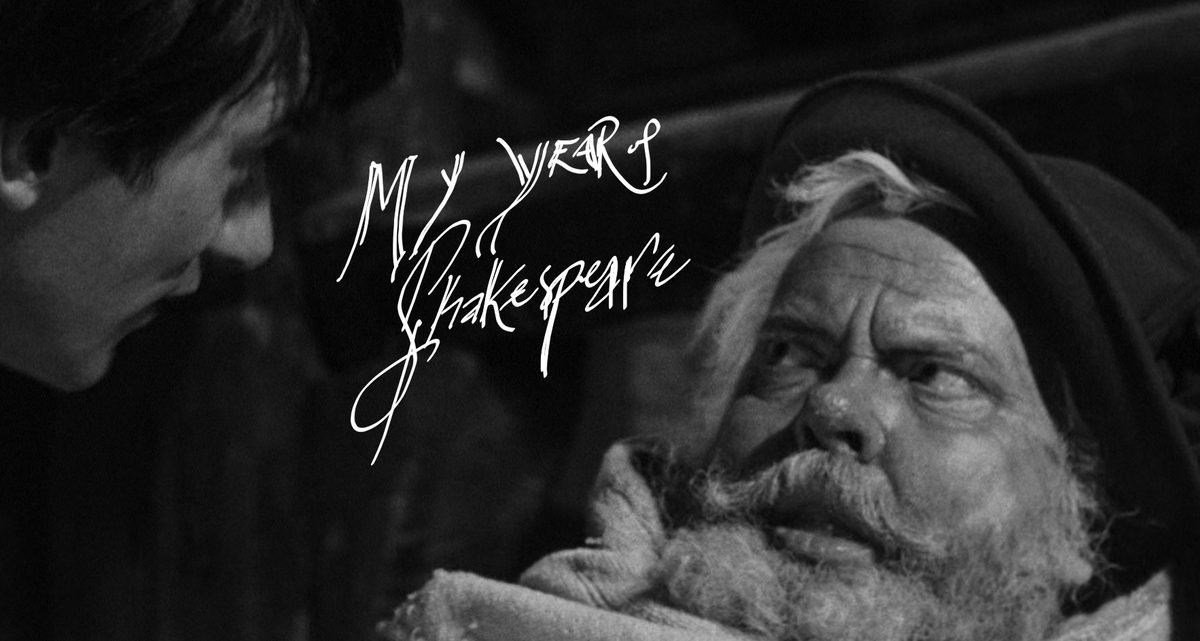
Welcome back to My Year of Shakespeare, the blog series where I pretend I'm even remotely qualified to talk about the works of William Shakespeare (or at least the versions that are mediated through adaptations of his work.)
This week we watched Chimes at Midnight, directed by and starring Orson Welles; it is an adaptation of 1&2 Henry IV told more from Falstaff's perspective, which reframes the story less as "the heir apparent, who can keep of mind the plight of the commoner, electing in his youth to carouse with the little people, steps into his role" and more as a repudiation of Falstaff's belief in the blood of the covenant of the "Good Hang", which allows for some huge emotive reactions from Welles. It also changes the story to be about how the heavy footsteps of the king shake the kingdom, change the way of life for his subjects; and demonstrates to the charismatic coward how their brand of levity is distinctly unwelcome in times of trials.
Now, I have been on record as a Falstaff hater. Not so with this one; where The Hollow Crown's portrayal was petty and venal in an offputting way, Welles's portrayal here is so magnetic that the exaggeration, bombast, and blatant lies are a delight to watch — you really cannot look away. Given that we've had two "fine-to-good" Falstaff performances, I have to wonder whether The Hollow Crown's portrayal was uniquely uncharismatic, like Simon Russell Beale doesn't have it like Orson Welles or even like Joel Edgerton, who I will concede maybe aspires to be Orson Welles.
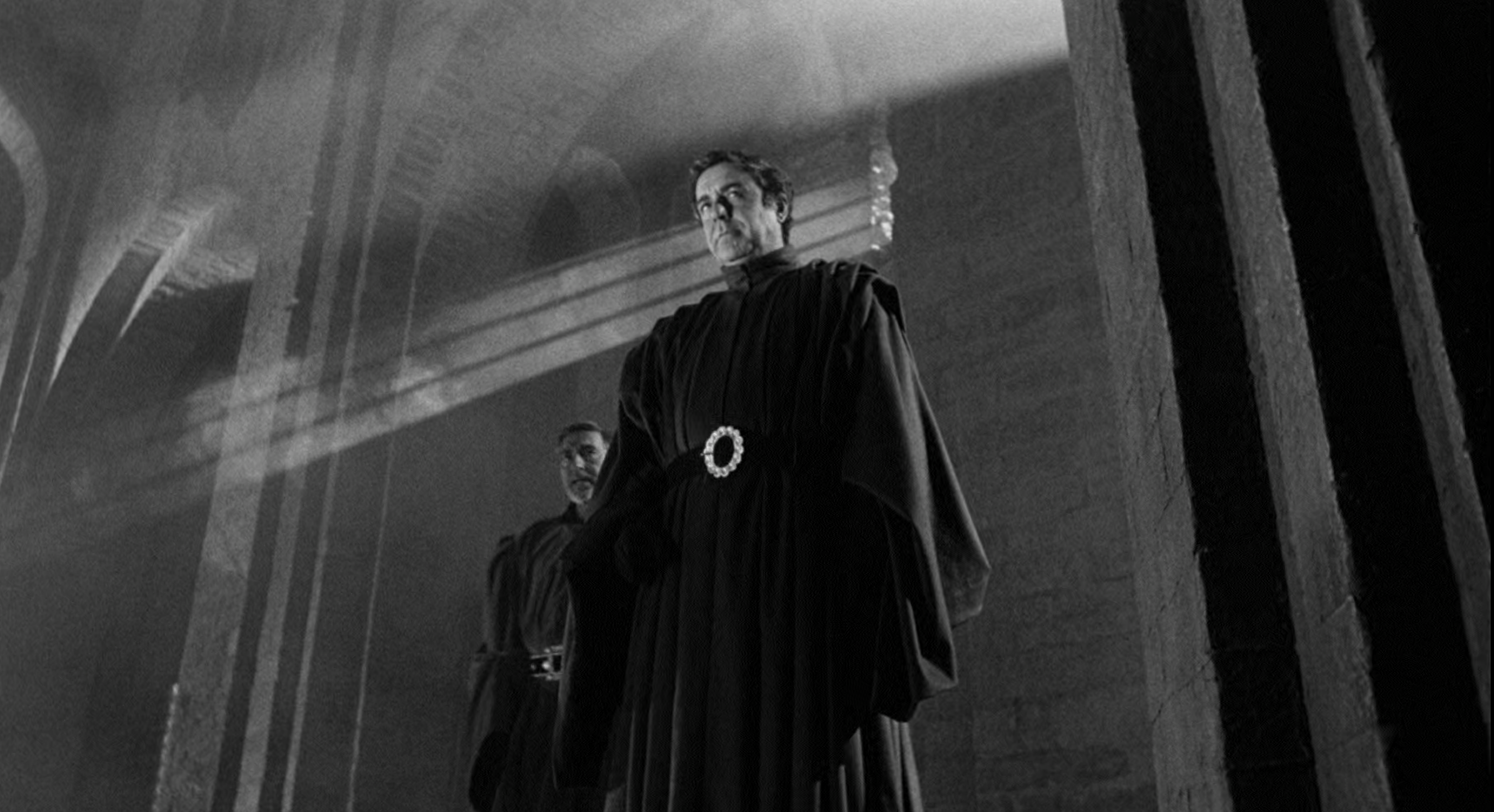
The staging and cinematography of this movie is beautiful — even in black and white this is a uniquely pretty movie with a great deal of craftsmanship on display in the scenery & setting. I watched the criterion release; perhaps older cuts are less ideal. I feel like The Tragedy of Macbeth had to have drawn from the aggressively shadowed sets and camerawork here.
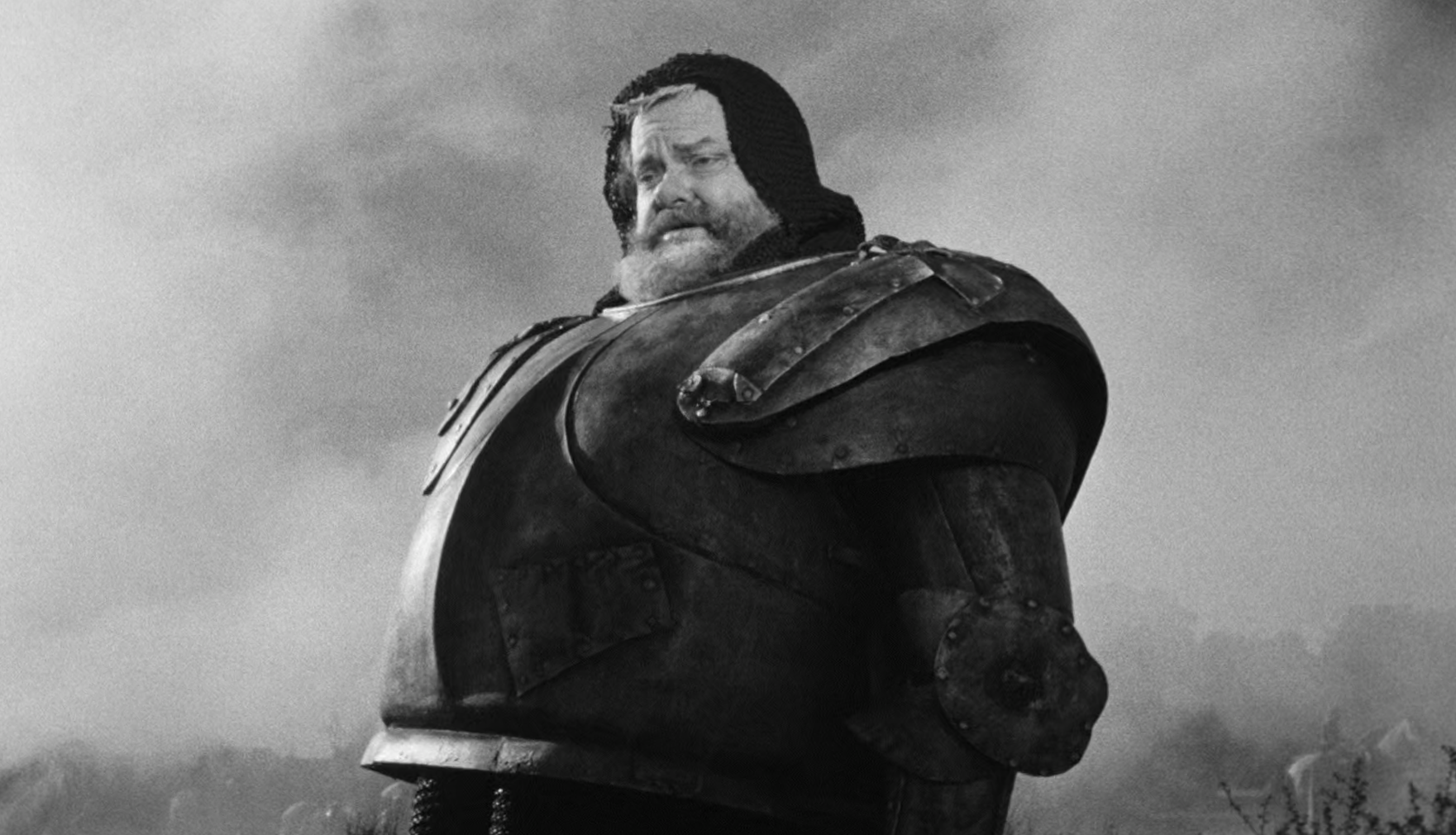
John Gielgud gives an aggressively stiff performance here (in contrast to his scheming that I praised in Julius Caesar); I understand why they needed to do this, his character's lithostoicism is needed for Hal to flow around. I think a re-writing of Henry IV as a sort of "King of the Hill" scenario, about worrying your son will be unable to carry on your legacy, would be very interesting.
Keith Baxter, primarily a stage performer, gives a very able performance as Hal, so able to convey to the audience via subtle emoting when his mood turns in witnessing Falstaff's bluster.
I've very confused why they elected for Ancient Pistol to speak with the Snagglepuss accent and voice in this. That is a choice that would never have occurred to me, not in a million years.
This has a surprisingly dynamic and aggressive fight sequence at Shrewsbury; I'd be surprised if no horses were injured during it. I think The King also pulled from this for its depiction of Agincourt, it's gross, muddy, close and brutal.
Some housekeeping: I took a moment, while writing this, to go re-read my Julius Caesar entry and wow I used to write a lot for MYOS. I will be the first to admit I am dealing with a bit of fatigue in getting through these, especially alongside the Hallowatch (which is, thankfully, ended); a summary is rarely a delight to compose when it would be better for an audience to sit and look at what I looked at for two hours, merely move directly on from a summary to a critique, give the non-watching reader "hey this was a delight, here's why" or "man this was a travesty" and let them decide whether my perspective is worth their time. Compounding the issue is the summaries for these are very frequently the same thing every week for a month — I'm not going to just copy/paste it; you, the reading audience, deserves better than that, but know that repetition of tasks brings me no joy. I suppose that makes the unconventional adaptation an even more important inclusion — diverting to talk about Colin Hanks imitating his brother Chet is a refreshing change of pace and has been sorely missing lately. Hopefully next week remedies this.
Next week
we're watching "My Own Private Idaho" (1991). After that:
• November 15 - Henry V (1989)
• November 22 - The Black Adder [series one] (1983)
• November 29 - The Goodbye Girl (1977) & Looking For Richard (1996)
For December, we're doing The Tempest - I'll have the specific adaptations