West Side Story [1961] & West Side Story [2021]

![West Side Story [1961] & West Side Story [2021]](/content/images/size/w1200/2026/02/west-side-story.png)
I'm watching 50-some odd Shakespeare adaptations this year and then writing about them for My Year of Shakespeare.
A different sort of modernization than Baz Luhrmann's last week, West Side Story [West Side Stories? West Sides Story? I suppose I'm not sure how to pluralize these when talking about both. Let's go with West Sides Story. -sb] sets Romeo & Juliet in Manhattan, with the two families being replaced with Puerto Rican immigrants and a youth gang of various ethnic whites (Italians and Irish in the 1961 adaptation; Italians, Irish, and Poles in the 2021 adaptation).
Despite generally bouncing hard off any media where someone bursts into song and the other people in the scene treat them with anything but withering glares, I really enjoyed these, especially their message of class solidarity.
Summary
Five sentence summary, Just King Things style.
[1] "When you're a Jet, you're a Jet all the way,"; the Jets, a hooligan gang, control their eight or so blocks of the Upper West Side, and they have a long-simmering feud with the Sharks, a Puerto Rican gang that is de-escalated by various community members when it threatens to boil over into full-out violence. [2] At a social mixer both the Jets and Sharks attend, where Tony, a Jet who is lying low and trying not to be involved in Official Jet Business due to his youth being the only thing that got him out of a manslaughter charge, dances with Maria, and the two fall in love. [3] Riff, the leader of the Jets, wants to organize a rumble to have it out once and for all with the Sharks; they set terms and despite the best efforts of cooler heads and authorities, Riff ends up killed by Bernardo [the leader of the Sharks and older brother of Maria], and Tony in a fit of rage, kills Bernardo, then flees to the neutral ground of the basement of the soda fountain. [4] Anita, Bernardo's girlfriend, goes to warn Tony that Maria will be late, but menaced by the idle Jets, instead delivers the lie that Chino, Bernardo's best friend, killed Maria for dancing with Tony. [5] Tony, grief-stricken, goes out to find Chino so that he can be killed as well; just as he sees Maria, he is shot by Chino, and Maria's grief causes her to grab Chino's gun, pick it up and threaten both gangs; she drops it before she can fire on anyone, and both gangs pick up Tony's corpse, the feud mended.
My Thoughts
One of the facets of the movies that elides the summary is how neither side feels social advancement is possible - this is done on the Sharks side with the song "America" and on the Jets side with "Gee Officer Krupke"; the social machine is designed to chew both sides up for labor, prison, etc; there's no "advancement" beyond what they can make for themselves, but they feel so confined by the existence of other people in their same predicament that they react violently, which then feeds the system via prison labor. This dimension is largely absent in the original text, as it is a bourgeoisie story of the confines of pride as the keeping of class and its consequences.
If you only have time to watch one — and my god, at two and a half hours each, who can be blamed for skipping one or the other — I'd say watch the 1961 version; there's some things moved around such that they flow better, it moves faster, and frankly looks better. That said, Rachel Zegler and Mike Faist (Maria and Riff, respectively) totally cook in the 2021 version, in a way their counterparts in the '61 version do not. 2021 also adds a supporting character of the Doc's wife for Rita Moreno (Anita in the 1961 version, the only speaking legacy casting), which helps inform why Doc's soda shop is neutral ground.
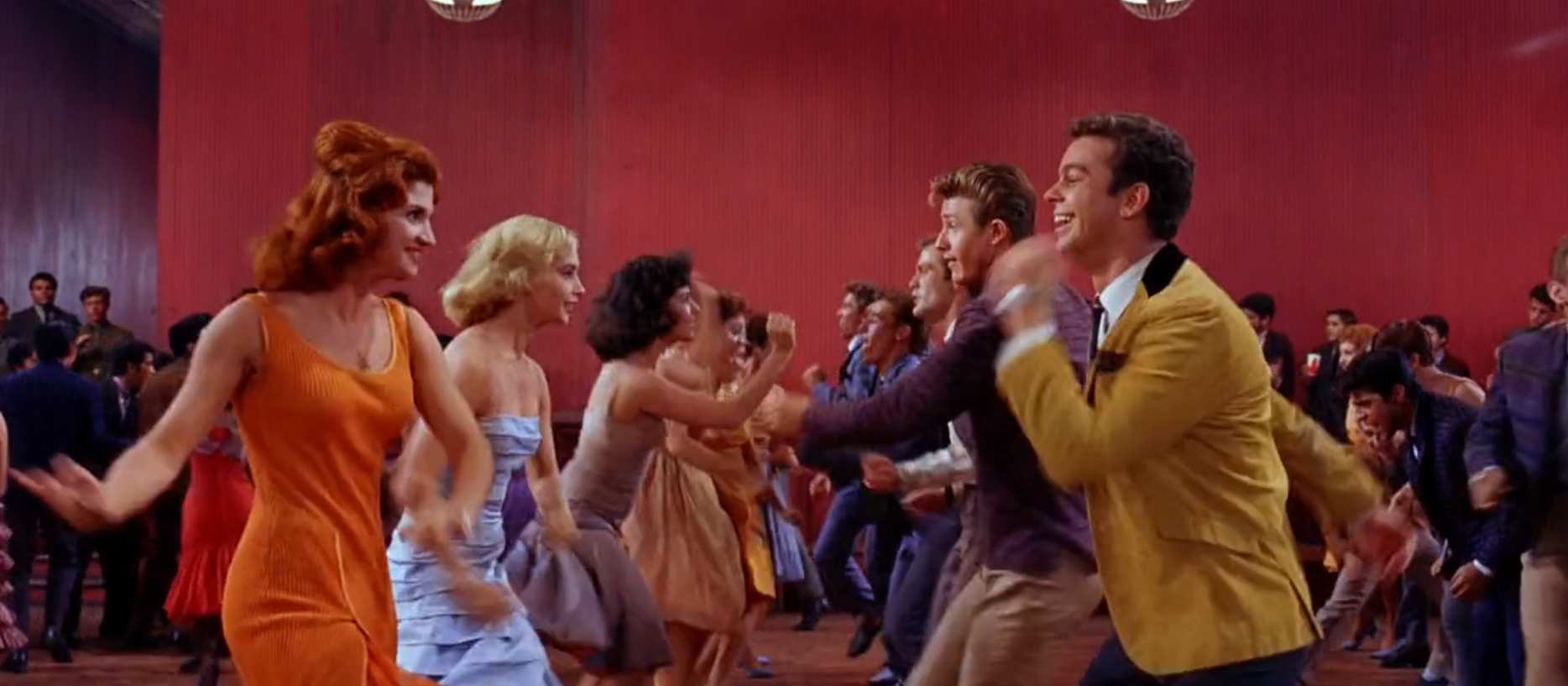
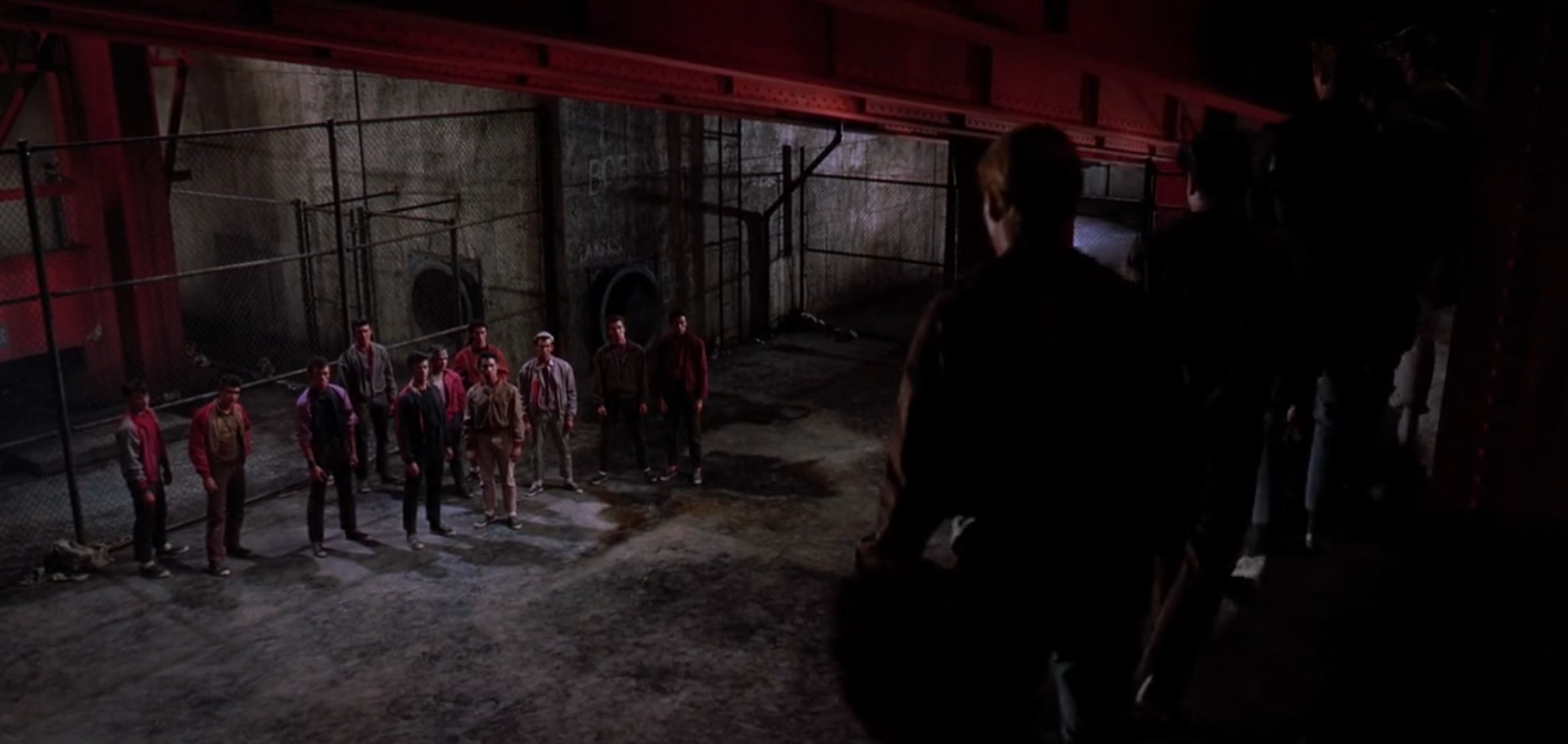
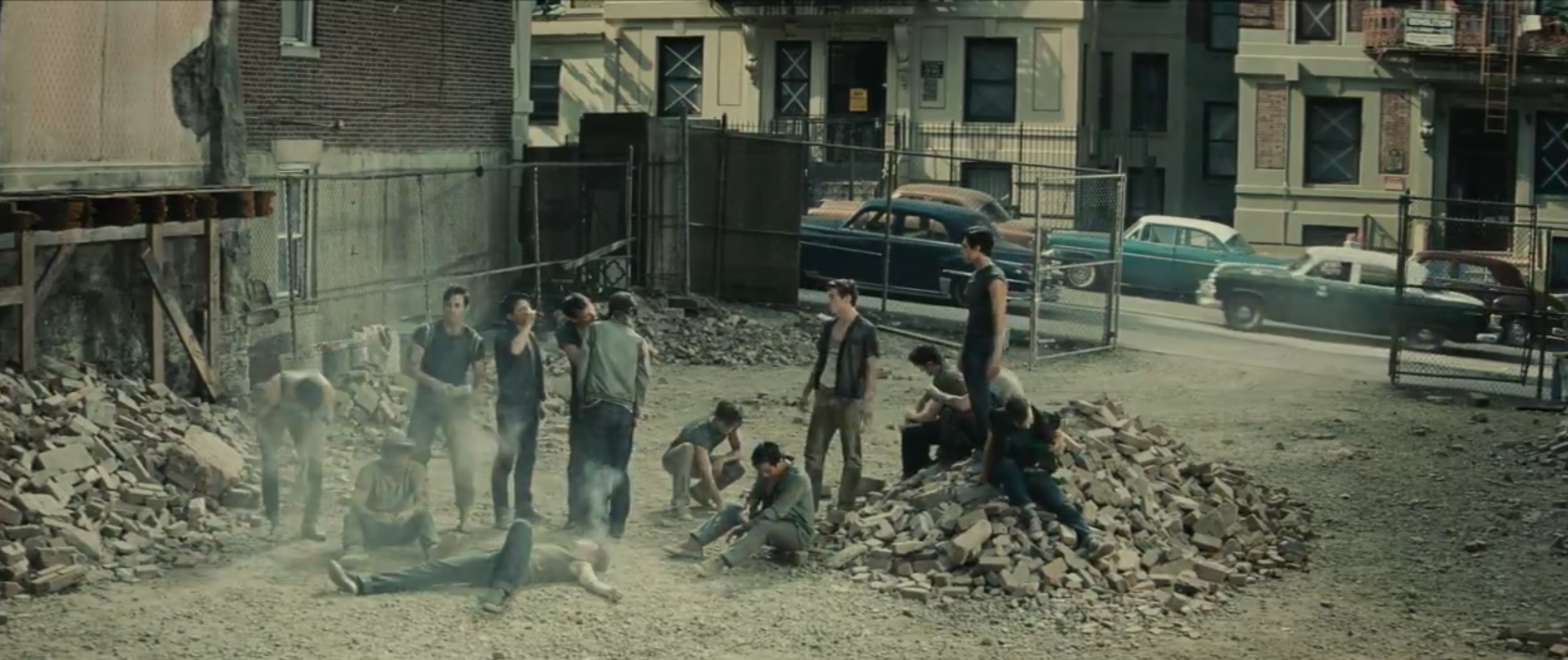
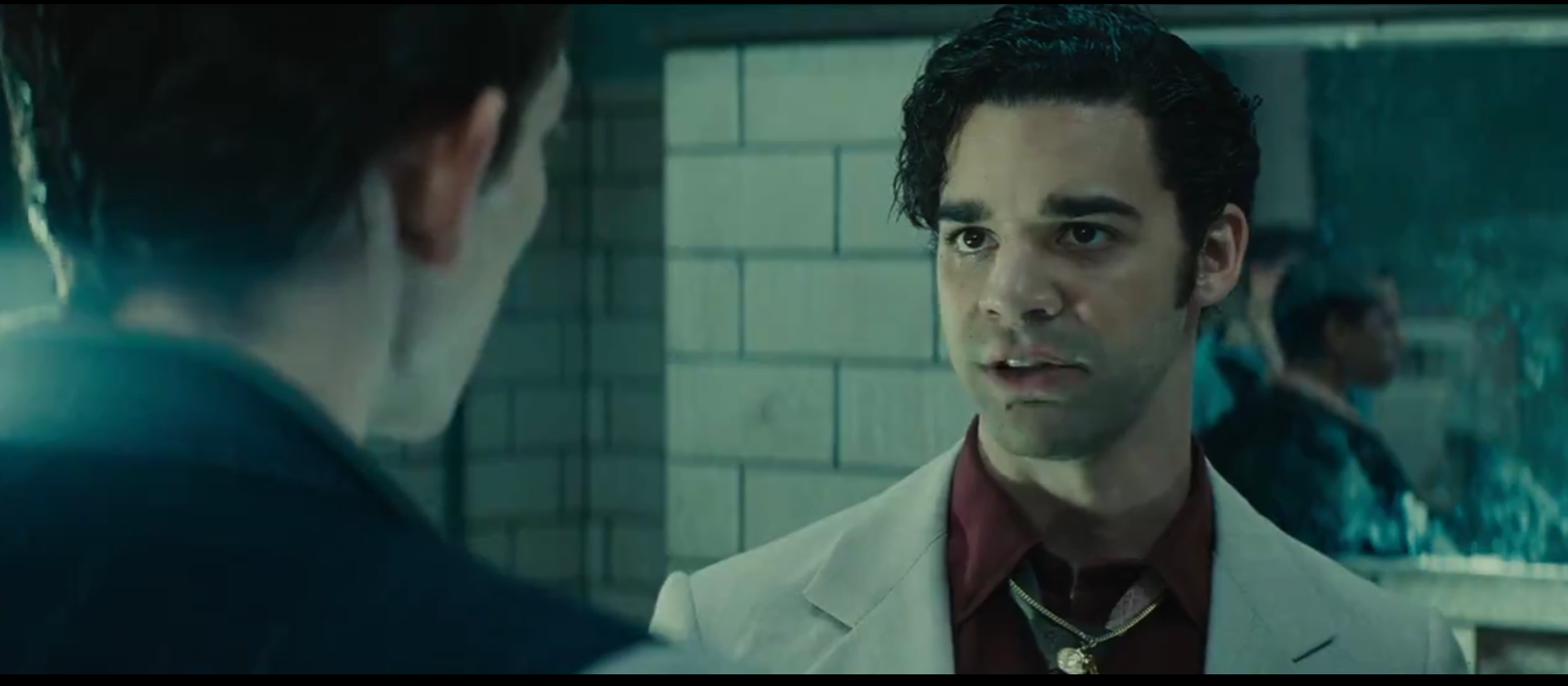
Between the two adaptations, the 1961 version looks so much more interesting and stylized - everything is eye-popping technicolor with these deep plush velvet reds, it is a god-damn crime what Janusz Kaminski did for the 2021 making it look like a marvel movie. Somehow, as a culture, we've become allergic to color [that isn't teal and sometimes orange], and as a painter, that makes me irate. Some samples below:
I realize it is sacrilege to criticize West Side Story's music — and thus Stephen Sondheim and Leonard Bernstein — but I have a small beef with the music/lyrics as performed in either, which is: if you whittle down any number to just its core whistle-able tune, you still have both the lyrical melody as well as the the bulk of the harmonies. This is great for things like embedding an earworm in an audience member, but without some sort of counterbalance - a bass part, imparting a rhythm that isn't the melody but moves opposite it, for instance - it gets grating. I suspect this is why a lot of people don't like musicals, especially from the late 40s to early 60s. It's the music equivalent of all the kids on a soccer team moving as a swarm chasing the ball, rather than spreading out so they can pass. Small beef.
Next Week
We are concluding our Romeo and Juliet unit next week with 1987's "China Girl", a normal movie by normal filmmaker Abel Ferrara.
As for March, the schedule's looking like
- Mar 7: Antony & Cleopatra [1972]
- Mar 14: Julius Caesar [1953]
- Mar 21: Coriolanus [2011]
- Mar 28: Titus [1999]
Thank you for reading My Year of Shakespeare. If you have any thoughts, responses, etc, please feel free to write me an email (my email address will show up on the banner if you are signed in).